Skip to Content Skip to Navigation Show Trail Map Show About the Trail Show Important Trail Details Read Trail Reviews

Your bookings

Ngank Wen Bidi, Wadjemup (Rottnest Island)

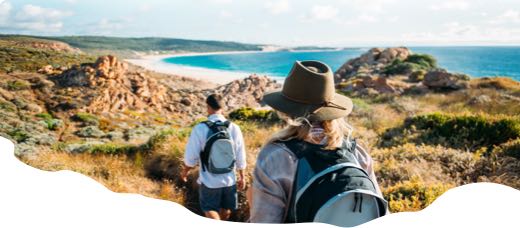
The Ngank Wen Bidi is a loop trail that circumnavigates the spectacular West End of Rottnest Island. The trail links visitors from Narrow Neck to Cape Vlamingh (the most western point of the Island), via both the north and south coast. Expect to see marine wildlife, bird life and some of the most secluded beaches on the Island.

Trail difficulty
Trail difficulty
  • Length 7.6km
  • Est. time 1-3 hours
  • Circuit / loop
Today

17°C

19°

15°

Earn badges and points by completing this trail.

Earn 2 Points

Trails WA supports the seven principles recommended by Leave No Trace Australia for minimising your impacts when using the trails.

Learn more

Read more about this trail

The most western section of the Wadjemup Bidi is named the Ngank Wen Bidi. The meaning of the Whadjuk Noongar name in English is "the place where the sun is waning or dies", or in other words “the place of the setting sun".

The trail allows you to circumnavigate the West End, taking in all of the best spots along the way. Three trails intersect each other at Narrow Neck and the Ngank Wen Bidi is the one that will guide you to the most western point of Rottnest Island.

There is access infrastructure along the northern coast, with the fist port of call being a stroll along Lady Edeline beach. The beach is spectacular all year round and is nice and secluded when the weather is coming in from the south. A set of stairs at the west end of the beach links to a bus stop, and also allows you to jump on the trail and head towards Marjorie Bay.

Marjorie Bay is one of the Islands best kept secrets. The boating community have known about this little gem for decades, with the bay being decorated with yellow mooring buoys. The eastern end of the beach boasts a natural lagoon within the reef. This is a popular spot for cooling off in the summer months, and remains protected from any currents and swell.

Continuing west, the trail snakes in to Mabel Cove. Look out for the crocodile rock! Heading off in to the scrub it won’t be long before you emerge to the views of Eagle Bay. The crystal clear turquoise waters are breathtaking.

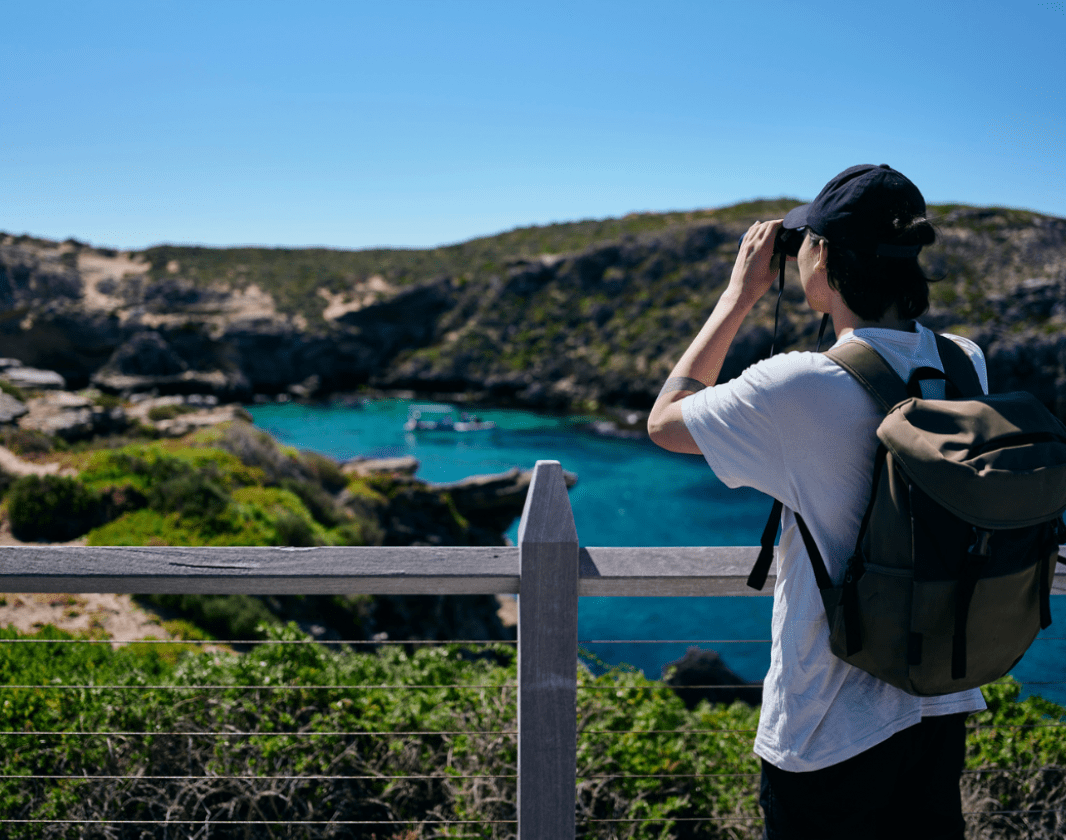
The trail then arrives at one of the Islands highlights, the Cathedral Rocks Seal Viewing platform. From here you can have a rest, take in the view and be entertained with the frolicking antics of the New Zealand Fur Seal Colony. Please remember to respect the wildlife and remain on the viewing platform. Free to use binoculars are available for a closer look.

Following the limestone path to the south, head for the West End boardwalk. The specifically designed boardwalk allows access on to Cape Vlamingh, whilst protecting the nesting shearwater seabirds, who burrow in to the ground. The views from the boardwalk are incredible, especially in the humpback whale migration months. Humpbacks and southern right whales can be seen off of Rottnest Island heading north at the beginning of winter, and heading back down south between late August and November. Their recognizable blow of misty air and vapor can easily be spotted off the coast, and commonly very close to the land. Free to use binoculars are available at the top of the boardwalk.

Once you have taken in the highlights of the most western point, head back towards the bus stop and follow the trail along the southern coast. The views looking back along the south coast of the Island are beautiful. The contrast between the land, limestone and ocean are breath taking. Be sure to take care on this section of trail. The ocean is not accessible from the southern side of the Ngank Wen Bidi, as the Island rises out of the ocean via extremely dangerous limestone cliffs. The views are fantastic and worth the trip, and you can always have a dip in the ocean at the end of the trail at either Strickland Bay or Lady Edeline beach.

Note: Cathedral Rocks Seal Viewing Platform and West End boardwalk are wheelchair accessible. These can be accessed by bus, but not by the Ngank Wen Bidi trail.

Rottnest Island Authority

(08) 9432 9300

Rottnest Island Visitor Centre

(08) 9372 9730

Other Links

Flora and Fauna Statistics

20+
Mammal species
280+
Bird species
400+
Fish species

Wadjemup / Rottnest Island is a natural sancturay with unique flora and fauna. It's isolation has allowed a diverse variety of plants and wildlife to thrive, many of which are found nowhere else on the mainland. A main attraction is the island’s iconic species – the Quokka, but there are many other animals to see arcross and around the island.

Along the coastal parts you can see Osprey soaring through the sky, migrating Humpback Whales, dolphins and seals, and numerous species of fish. Coastal birds such as Oystercatchers, Silver Gulls and Fairy Terns can be found along the shoreline. In the coastal healthlands King Skinks, Bobtail lizards and dugites are located, and the salt lakes and woodlands attract many birds, Australian Shelducks and Pied Cormorants.

Wadjemup features a resilient, coastal ecosystem dominated by three native woodland trees: the Rottnest Island Pine, the Rottnest Island Tea Tree and the coast wattle. The Rottnest Island Daisy is a native blue/purple wildflower that blooms across the dunes, alongside spinifex and coastal rosemary. The wetlands are populated by salt-tolerant samphire, and the shallow waters and limestone reefs are home to a diverse array of marine plants, including over 300 species seaweeds and 8 prominent seagrass species that sustain the local marine life. 


Keep an eye out for these species:

Quokka

Setonix brachyurus

Animalia: Mammalia

Conservation status: Vulnerable

VU

Rottnest Island Bobtail

Tiliqua rugosa konowi

Animalia: Reptilia

Conservation status: Vulnerable

VU

Humpback Whale

Megaptera novaeangliae

Animalia: Mammalia

Conservation status: Conservation Dependent

Long-nosed Fur Seal

Arctocephalus forsteri

Animalia: Mammalia

Conservation status: Other Specially Protected

OS

Zebrafish

Girella zebra

Animalia: Actinopterygii

Western King Wrasse

Coris auricularis

Animalia: Actinopterygii

Australian Pied Oystercatcher

Haematopus longirostris

Animalia: Aves

Fairy Tern

Sternula nereis

Animalia: Aves

Pied Cormorant

Phalacrocorax (Phalacrocorax) varius

Animalia: Aves

Cushion Fanflower

Scaevola crassifolia

Plantae: Equisetopsida

Rottnest Island Daisy

Trachymene coerulea

Plantae: Equisetopsida

Samphires

Tecticornia

Plantae: Equisetopsida

Be trail ready

Here is everything you need to know before visiting this trail.

Time / Duration

Up to 3 hours

Length

7.6km loop

Fees

Visitor Fees are included in ferry travel. If you are travelling by private vessel you can pay online at www.rottnestisland.com or come in to the visitors centre at the Main Jetty on the Island.

Trail Access

Ferry - Departing Perth/Fremantle (www.rottnestexpress.com.au or www.sealinkrottnest.com.au) or Hillarys Boat Harbour (www.rottnestfastferries.com.au)

Trail Start

Narrow Neck, Rocky Bay

Get directions

Trail End

When to go

March to November

What’s the weather like?

Bush Walk

Class 4

Difficult trail with rough surface that may have very steep hills or extensive rock hopping. Directional signage may be limited. Bushwalking experience, navigation and emergency first aid skills, and good fitness required.

Additional information

There is some beach walking on Marjorie Bay. Beware of seasonal access to Marjorie Bay and take the linking trail from the main road in to the western end of Marjorie Bay.
The west end of the island is littered with ground nesting birds. It is paramount that walkers remain on the trail to avoid broken ankles from nest collapse, and damage to the wildlife.
The southern coast is extremely dramatic, but at the same time very fragile. Be sure to take note of warning signage and remain on the trail at all times.

What To Pack

Hazards & Warnings

Be aware there are poisonous snakes on Rottnest Island. The Dugite (Pseudonaja affinis) is a timid creature, but may bite if trod on or harassed. Seek immediate medical assistance. Be aware of unstable rocky outcrops; always stick to the trail.

Prohibited items

No pets. No bikes on trail (Bikes are encouraged on the Island, but not on the walking trails). No Camping or open fires.

Facilities

Bike hire is available at Pedal and Flipper in the settlement. There are lots of bike racks situated specifically to allow you to hop off, lock up, and enjoy the walk trail.
Water available ONLY in Thomson Bay - ensure you fill up water bottles before leaving Thomson Bay.
Toilets available along the trail at Cape Vlamingh (West End) and Narrow Neck.
Bins and recycling points are situated at bus stops; please take all litter with you.
Note that there is WHEELCHAIR access to the points of interest at the West End. There is a compacted limestone path to the Cathedral Rocks Seal Viewing Platform, which would require assistance for access and egress. The West End board walk is recycled plastic panels and is easily accessible by wheelchair.

  • Lookouts
  • Picnic Area
  • Public Toilet
  • View Platform

Today Aug 17, 12:37am

17°C

Feels like 16°C

Max 19°

Min 15°

Precipitation: 100%

Visibility: 10km

Wind: 7.51km/h N

Weather data provided by:

Complete this trail to earn badges and points!

Earn points and badges and become a "TrailsWA Expert" by completing trails and leaving reviews.

Earn 2 Points

Earn 2 points towards
your TrailsWA level

1 trail goers have rated this trail as 4 out of 5!

We love to hear from people who've been on our Western Australian trails, so it would be most appreciated it if you wanted to leave a review.

Chelle Fisher

Reviewed 14 Sep 2022, 6:56pm

Probably my favourite trail on the island as Cathedral Rocks is a highlight but I also enjoyed the secluded bays and beaches, as well as the gorgeous limestone cliffs near Mabel Cove.

Like this trail? Explore others nearby

More around Perth & Surrounds

Supporters & Partners

Trails are free and offer countless benefits to our community, from fostering fun and fitness to encouraging social connection, exploration, and personal challenges. These exceptional trail experiences are made possible through the support and collaboration of these great organisations and initiatives: