Visit Albany
Albany is a world-class hiker's paradise - with its stunning coastline, pristine nature reserves and proximity to one of the oldest mountain ranges in the world.Â
There truly is something...
Your bookings
Earn badges and points by completing this trail.
Trails WA supports the seven principles recommended by Leave No Trace Australia for minimising your impacts when using the trails.
Learn moreRead more about this trail
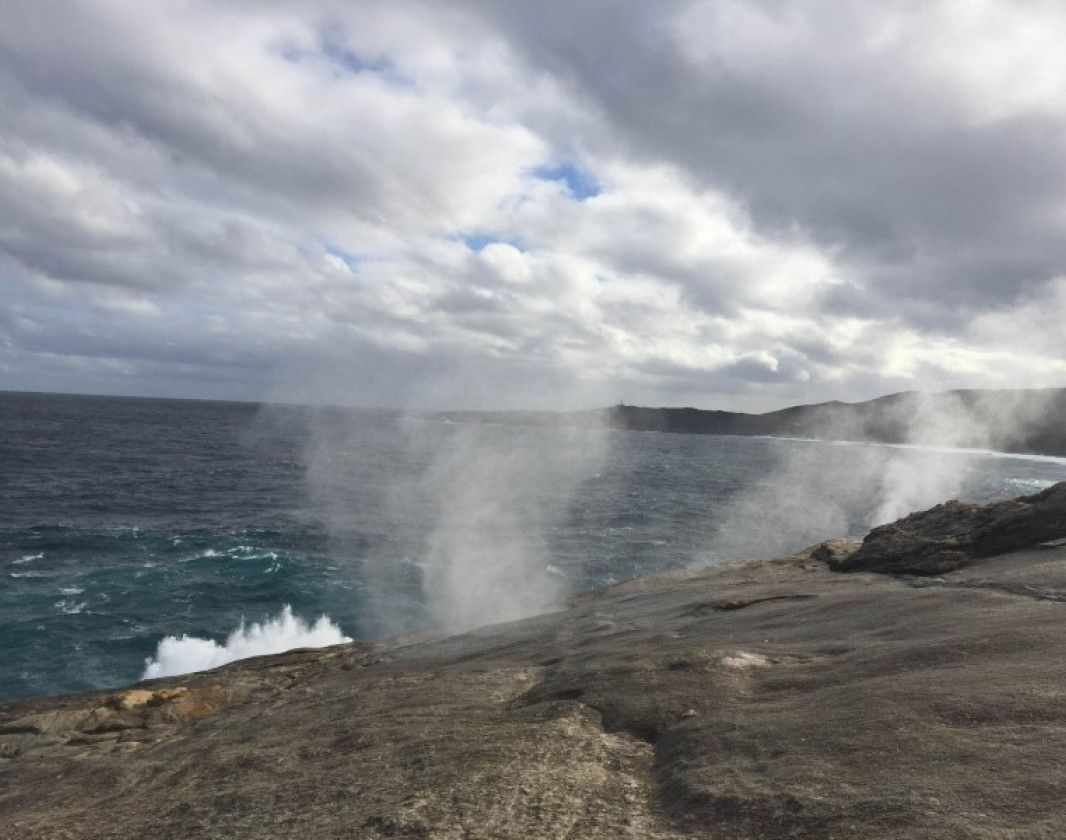
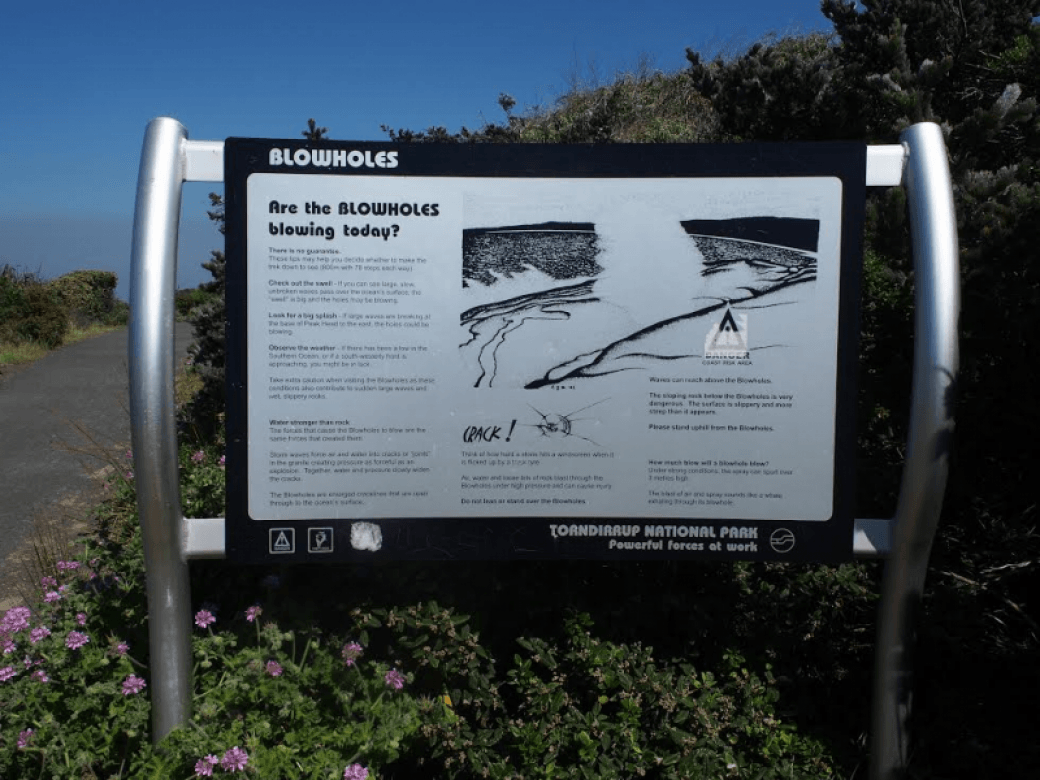
The Blowholes, the result of water being forced up into a crackline in the granite, produce spray and loud eerie sounds when a big swell is running. Depending on the swell, size and direction of approach to the sea cliffs The Blowholes may or may not be blowing. When they do, the noise is quite impressive and this attraction should not be missed, especially on a day when the ocean swell is high. Just rug-up warmly and wear sturdy non-slip shoes.
This walk is the most popular in Torndirrup National Park, but be sure to keep away from the ocean at all times, as several lives have been lost in this vicinity. The 1.6km return walk begins at the western end of the carpark and is well signposted. Follow the bitumen path for about 400 metres to the top of some steps. There are fine views of Peak Head to the south-east and Eclipse Island to the south-west. After the steps the path swings to the right then traverses an open granite area. Signs indicate the location of the Blowholes. At the Blowholes, do not proceed any further to the ocean and do not stand over the Blowholes.
No signage on the road by the way. First turning on the right after the natural bridge and Gap viewing platform. If you see the sign for Jimmy Newells you have already passed it going south.
(08) 6820 3700
Comprehensive information on the South West region including destinations, things to see and do, accommodation and tours.
Located just south of Albany, Torndirrup National Park features a diverse mix of ecosystems. Its rugged, wind-swept coastal heathland and sheltered gullies are home to an array of unique flora inlcuding spectacular spring flowers and rare endemic shrubs - as well as endangered mammals and rich birdlife.
The park’s vegetation changes dramatically from the exposed coastal cliffs to the sheltered inland valleys. Flora in these areas include hardy, salt-resistant, and low-growing plants, including native rosemary, banjine, and thick-leafed fanflower. In the woodland forests there are peppermint trees, swamp yate and jarrah, and shrubs inlcuding the rare Albany woolly-bush. From spring to early summer, the park bursts with color. Keep an eye out for the red and green kangaroo paws, delicate running postmen, and hidden spider or sun orchids. The area is also home to critically endangered flora, like the blue tinsel lily.
Because of the varied terrain, the park supports a dense network of marsupials, birds, and marine life. Along with western grey kangaroos, quendas and the tiny honey possum, the park is also home to the endangered western ringtail possum. Honeyeaters and wattlebirds flit through the heath, while birds of prey (like kestrels, whistling kites, and black-shouldered kites) ride the coastal air currents. You may also spot red-eared firetail finches, western rosellas, and seabirds like petrels. Reptiles like dugites, tiger snakes, bardicks, and bobtail lizards can be found in the rocky crevices and heath. The coastal viewing platforms (such as the ones near the Albany Wind Farm) are excellent vantage points for spotting migrating southern right and humpback whales.
Torndirrup Peninsula one of the Great Southern’s most spectacular landscapes and was once connected to Antarctica, as part of the ancient super-continent – Gondwana.
The area lies within the Albany–Fraser Orogen, a vast belt of ancient rocks formed between 1,200 and 1,400 million years ago when continental plates collided along the southern margin of Australia.
The peninsula is dominated by granite and gneiss — extremely hard metamorphic and igneous rocks that formed deep within the Earth’s crust under intense heat and pressure. In many areas, these rocks have been exposed for hundreds of millions of years as erosion gradually stripped away softer overlying layers.
Rainfall and powerful ocean swells continually batter this coastline, exploiting fractures and weaknesses in the granite and gneiss. Over time, this erosion has carved some of the park’s most famous geological features.
Along exposed sections of coastline, compressed seawater and air are forced through vertical rock fractures, creating blowholes that can spray seawater high into the air during rough conditions. These features develop where wave-cut caves intersect with joints and cracks extending upward through the rock.
Here is everything you need to know before visiting this trail.
0.5 hour
1.6km return
Road 2WD
Frenchman Bay Road, Torndirrup National Park, 400km (5 hours) south of Perth
Class 3
Moderate trail that may have short steep hills, rough surface, many steps or some rock hopping. Directional signage. Some bushwalking experience and moderate fitness required.
Group A - Urban Trails (Urban trails or short trails near facilities)
Preferably wear closed in shoes with good grip.
The path to the blowholes contains many steps. Take care when wet and windy and do not venture downslope from the path.
No pets
14°C
Feels like 14°C
Max 14°C
Min 10°C
Earn points and badges and become a "TrailsWA Expert" by completing trails and leaving reviews.
Earn 1 point towards
your TrailsWA level
Earn the Popular Trail badge when you complete this trail.
We love to hear from people who've been on our Western Australian trails, so it would be most appreciated it if you wanted to leave a review.
Trails are free and offer countless benefits to our community, from fostering fun and fitness to encouraging social connection, exploration, and personal challenges. These exceptional trail experiences are made possible through the support and collaboration of these great organisations and initiatives:
Join trails wa to add this trail to your favourite. By joining you will also be able to rate and review trails and share your photos with other trail goers!
Sign in to your account to add this trail to your list of favourites, and much more.